
Sub-Total: $0.00
Kaiju: Japan’s Monsters and What They Were Made Of
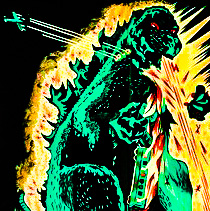
Godzilla first emerged from the sea in 1954, nine years after Hiroshima and Nagasaki. The timing was no coincidence.
The original Gojira, before the American re-edit added Raymond Burr, is not a monster movie in the usual Western sense. It is a horror film about radiation, the consequences of weapons humans are not equipped to understand or control, and a force unleashed by what we have done to the natural world. Godzilla cannot be reasoned with, negotiated with, or absorbed into everyday life.
Godzilla is not evil. Godzilla is consequence.
November 3 is Godzilla’s birthday: the date the original film opened in Japan in 1954. This year, the date also brings Godzilla Minus Zero, Takashi Yamazaki’s follow-up to Godzilla Minus One. The new film opens in Japan today, with North American IMAX early-access screenings today ahead of its wider release on November 6.
What kaiju are
Kaiju means “strange beast” in Japanese. In the Godzilla tradition, a monster is rarely just a large obstacle for the hero to defeat. These creatures give shape to cultural anxieties, turning fears that can feel abstract or overwhelming into something visible, physical, and impossible to ignore.
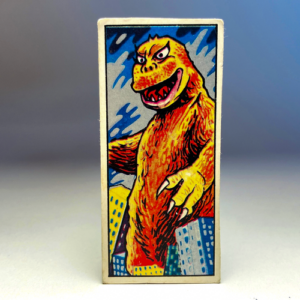
1960s “Godzilla” vintage menko card
That meaning changes across films and eras. Mothra is often associated with nature, sacred power, and humanity’s responsibility toward the world it disrupts. King Ghidorah arrives as an overwhelming outside force, a destroyer from beyond the familiar order. Mechagodzilla turns human ingenuity back on Godzilla: a machine built to control or defeat the monster can become another source of danger. Rodan, like Godzilla, can be a natural disaster with wings.
And sometimes the monsters fight one another.
When Godzilla faces another kaiju, the story changes. There is still a threat, but there is also conflict over who or what gets to shape the world that remains. Godzilla can be destroyer, rival, reluctant defender, or all three, depending on the film. A monster-versus-monster battle asks us to look past the spectacle and consider what each creature represents, what balance is being disrupted, and who pays the price while titans settle their dispute.
The other monster does not erase Godzilla’s meaning. It complicates it. A force that once seemed like the whole problem may become the only thing standing between us and something worse.
What your kaiju looks like
Every era and culture has its kaiju: the problem too large for any one person to fight, requiring a collective response, often born from something society has done, ignored, or refused to see. Today’s kaiju might include climate change, artificial intelligence advancing faster than governance, or the slow erosion of institutional trust.
There are personal kaiju, too. The consequence of a past decision that grows larger the longer it goes unaddressed. The problem in an organization everyone sees but no one will name. The fear that feels too big to approach directly.
The kaiju stories I return to are not just about defeating a monster. They are about recognizing what it embodies, what woke it, and what other forces it may unleash. Sometimes the monster is the danger. Sometimes it is a warning. Sometimes it is the imperfect ally you need to face something worse.
The kaiju tradition offers a useful reframe: the monster may be the symptom as much as the enemy. What it destroys may reveal what needed to change. What it forces may be the reckoning everyone had been avoiding.
What is your kaiju? And what might it be telling you about the world that woke it?