
Sub-Total: $0.00
Things That Shaped Me
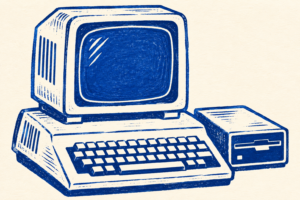
I’ve been writing this blog for almost four years. I’ve written about stereoscopes and Omnibot, mudlarking and cassette tapes, a 1970s coloring book. I’ve written about games, films, monsters, and the stories we use to make sense of the world.
What I haven’t done, not directly, is answer the question underneath all of it.
What actually shaped me? Not the nostalgic things. Not the clever ones. The real list.
The things I kept
My mother was a math teacher. When I was a kid, she made me a practice quiz on a yellow legal pad. It was a small daily ritual, but it taught me that a problem could be broken into steps, that patterns could be found, and that getting something wrong was part of figuring it out.
She was curious about computers, too. I remember taking a BASIC class with her when I was very young, and dot-matrix printouts spread across the dining-room table. The computer was still a little mysterious, but the important idea was simple: tell a machine what to do, see what happens, and work out why.
My father was a businessperson and a good writer. He knew how to make an idea clear. He also expressed affection through deliberately terrible rhyming poems and birthday notes. For years, he drove a silver Ford Econoline from the suburbs into Detroit, carrying us along Seven Mile Road. Looking back, I think I learned two things from him: words can do practical work, and the effort behind a small gesture can matter more than its polish.
Those lessons stayed with me. Look at the problem. Understand how it works. Find a way to explain it. Then try something.
That orientation has shown up in my work more times than I can count. It’s one reason I was drawn to exercise design. An exercise is engineering for human behavior. You study a system, create conditions for people to act, and see what their choices reveal. The goal is not simply to tell people what might happen. It is to give them a place to practice responding.
The things I didn’t keep but can’t forget
The Sears and Montgomery Ward annual Wish Books were an annual window into what might be possible. I spent hours with its hundreds of pages every fall, imagining the toys and gadgets I might get if I was lucky or patient enough. The catalog wasn’t just a collection of things. It was a map of choices: What was available? What did it cost?
I still think in catalog terms sometimes, though now I’m more likely to be weighing ideas than toys.
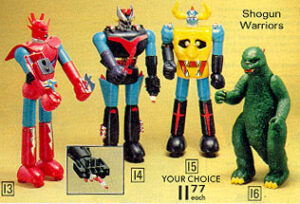
Montgomery Ward’s catalog ad from Christmas 1978
My family went to the Henry Ford Museum of American Innovation every few years. I don’t remember one exhibit as much as the feeling of being surrounded by the accumulated density of human ingenuity. A steam locomotive, an Edison phonograph, a space capsule. Each had once been an answer to a problem, a glimpse of a possible future. Then it became ordinary, and eventually history.
I grew up near Detroit, where that cycle was hard to miss. The city’s industrial past was not an abstract idea. It was part of the landscape and the family stories. In my film idea Michigan Left, the industrial edge of the city and the woods along the way become a threshold between an ordinary world and an imagined one. That feels true to how I remember growing up: the everyday route could also lead somewhere strange, if you paid attention.
Japan gave me a different kind of lesson. The first time I went, I was struck by how fully a society could organize daily life according to assumptions different from my own. Not better or worse, just different, with its own internal logic. Since then, I’ve thought about that experience whenever I’m designing a scenario: Which assumptions am I treating as universal when they’re really local? What looks like physics but is actually culture?
The thing I didn’t know was shaping me
Games. Not just playing them, but wondering why one game held my attention while another felt like a chore. Why did some simulations teach you something, while others only filled time? What made a rule feel natural? When did a choice become meaningful?
As a kid, my worlds included Dungeons & Dragons, painted miniatures, an Apple IIe, and a Tomy Omnibot. I didn’t have a vocabulary for game design then. I just knew that a miniature could become a character, a set of rules could open a world, and a game gave you somewhere to try a decision and see what followed.
Years later, those observations found a home in my work. I began thinking about games as models of the world: places where people can act, encounter consequences, adjust their understanding, and try again.
I can see now that these weren’t separate interests. The games, the stories, the scenarios, even the old objects I keep writing about all come back to the same questions: What are the rules here? What happens if I cross the boundary? What choices do I have? What might I learn by trying?
The objects that shaped me aren’t necessarily the ones I would have predicted. A yellow legal pad. A carpool van. A catalog. A museum full of old machines. A game world assembled from dice and imagination. A train moving through a country whose rhythms I didn’t yet understand.
They’re quiet things. They kept running in the background until I finally noticed what they were teaching me.
What are yours?